Tag: neurodivergence

  • Inside our autistic minds

    I’d avoided watching this. Partly from all the discussion about it, and from someone asking me if I’d watched it… so of course that expectation was paralysing. Mainly though, because of fear of a mainstream documentary just being shit.

    It wasn’t.

    It really, really wasn’t.

    Flo’s video to her mum had me in tears. I’ve asked my mum to watch it, because of that scene (well, the whole thing).. that scene felt like everything I’d say to my mum if I could find the words and courage. I related so hard to everything Flo had experienced and expressed. Being obviously different from a young age, but not knowing why. Knowing you needed to be more like everyone else.

    The sense that who I truly was, was Wrong.

    With PDA and the way it differs from non-PDA autism, for years I felt that autism didn’t even fit. That I definitely felt odd, and different, and struggled socially… but couldn’t possibly be Autistic. I was just Wrong. Not struggling as much as Autistics would, seeming to just be a failing neurotypical. Discovering that PDA explains the space of ‘surface social skills, but still impaired’ was life-changing. Finding that I do have a place in the community of neurodivergents feels like coming home to my own people. My neurokin.

    Not only coming home to my own people, but coming home to myself. My stims. My hyperactivity – and knowing the benefits of expressing it through physical activity. My intense interests. My demand anxiety. My rollercoaster emotional experience. My ability to roleplay. My need for control. Myself.

    It’s so good to know that I am Autistic, and to find content that reflects my experience back to me. Not just this documentary, but all the content on social media. Books written by Autistic people (I recently pre-ordered Untypical by Pete Wharmby and will review it here when it arrives). The play I saw in July last year, Atypical Rainbow.

    But also learning about the experiences of people elsewhere on the spectrum. The documentary also focused on Murray, a non-speaking Autistic man with apraxia. His film made me think of the kids at the school I worked with, and my hopes that they are introduced to spelling to communicate. It made me think of my period of situational mutism, where I too had so many thoughts – I was manic, so many many racing delusional thoughts! There was a lot going on in my internal world that no one had any idea about. Murray expressed himself beautifully and eloquently through his film, clearly an intelligent young man.

    There’s nothing like the magic of neuro-affirming creations by, and interactions with my neurokin. I wish we could all grow up with this from a young age, instead of experiencing behavioural modification, bullying, and abuse forcing us into hiding our true selves.
  • An Adventure!

    I’m seeing a favourite band tonight, at a venue in London. It’s been a hell of a day to reach the hotel – train to Ingatestone, coach to Newbury Park, then tube to Liverpool Street. A big unexpected change from a train directly to Liverpool Street.. and I have to navigate it all again tomorrow.

    I was very fortunate in that I got chatting to a lady who was on her way to meet her Autistic son, so she kept me company, and kept me calm through the uncertain middle portion of the journey. She told me about travel with assistance, which I think I will book for the return journey – I’m very much wishing I had decided to bring my sunflower lanyard. I thought I didn’t need it, because I expected a straightforward set of journeys which I feel comfortable with. I won’t make that mistake again. I did at least bring a stick, to help my fused spine* cope with so much walking and standing.

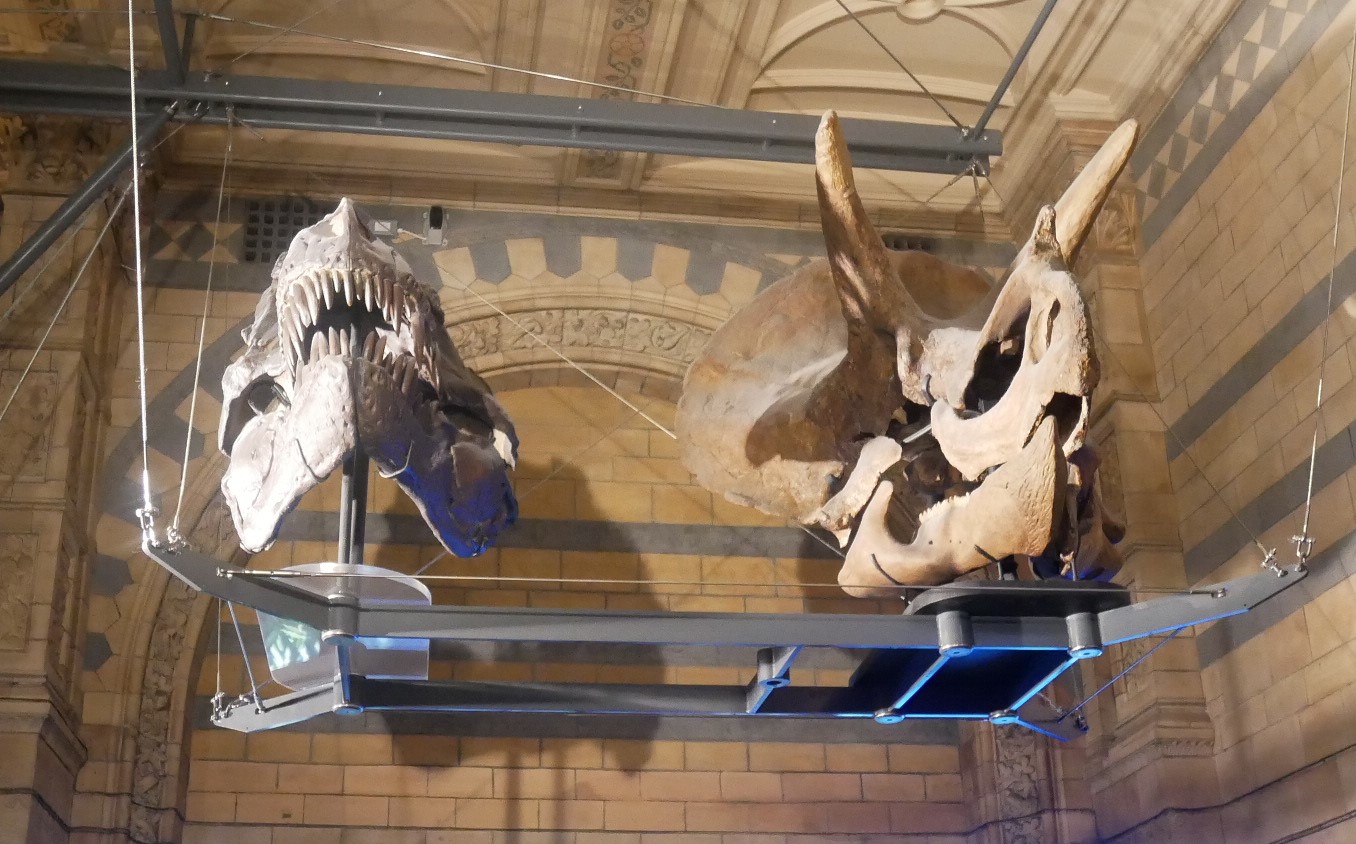
    From Liverpool Street I travelled to South Kensington, to visit the National History Museum. The train, coach and tube had all been full to the brim, and the museum was no different. I’d visit again, but not on the first day of February half term! (I’d also plan to be carrying less). Despite that, it was cool to see some fossils. Absolutely had to visit the dinosaur section first, to honour my childhood special interest. I then went on the mammals section, and saw the marine fossils. The scale is unbelievable.

    I used my ear defenders that a patient on the psych ward got me when she realised I was Autistic. That, coupled with the walking stick works pretty well to signal that you’re disabled, which tends to mean that any railway staff, or hotel staff take a gentle, calm approach. I also got offered a ground floor room, which reduces the walking after standing all night at the concert so I was very grateful.

    I’m glad that I have enough experience with London and travelling to be able to take on this type of trip on my own. The unexpected change was very anxiety provoking, but I checked the details of the changes, followed the crowd and found someone to help, and so, I coped. Possibly a sunflower lanyard would have enabled me to ask for extra support from the railway staff, and I definitely want to try it next time I make a similar journey.

    *I was diagnosed with infantile scoliosis at age 3, and had a spinal fusion to correct a 50 degree curvature in my thoracolumbar spine at age 20.

  • Impatience

    I’m feeling a sense of diffuse impatience tonight. There’s nothing specifically I’m impatient for, which is a bit strange. It’s a general eagerness to start making progress on my goals. To start gaining research experience, to start making progress in working to better the lives of my fellow AuDHDers, PDAers, and wider neurodivergents. To get involved in Mad Pride campaigning. To find how I can support the lives of people who are more permanently non-speaking than I was.

    There’s a million and one dreams, hopes, ambitions and desires bubbling inside of me. It’s just knowing how to enact them in a real sense – and knowing that I have my limits and can only achieve so much. I need to work out what I’m best suited to, where my efforts will be most effective. I need to find out what opportunities there are for ‘making a difference’, or what opportunities I can create.

    It’s the effort of years and I am only just at the beginning. ADHD has always made me a very impatient person, and the days where there’s no progress to be made, that you just have to live through are always very frustrating to me. It’s so hard to not feel that they are a waste of time, even though during them I can make progress on the living skills that will support me through all the upcoming years of work. The fundamentals are not interesting, and my brain wants to skip over them to the good part. Basic skills like money management (fundamental if you want to start your own business, which is something about which I have little seedlings of ideas growing). Or the self-care that might help me look after myself and avoid burnout (or recover from it). None of that can afford to be neglected, even if it isn’t sexy.

  • Non-speaking, briefly

    Something I haven’t mentioned here is that during my stay in a psychiatric ward in 2021-22, I had a brief experience of being non-speaking. I was very manic at the time, and my mind was super busy, so I’m not even sure I was always fully aware that I wasn’t actually saying anything. I do remember pointing to make decisions on what to eat in the dining room though.

    Something that stands out is being told ‘you’re a really good speaker’ by two people when I slowly started to talk again. In general.. lots of people treated me like I had intellectual disability because I wasn’t speaking. One lady did buy me ear defenders, as recommended by her autistic kid… but also a peppa pig colouring book. It definitely feels like most people assumed I was childlike in that phase of my stay. Something else that stands out is my psychiatrist saying the period where I wasn’t talking was ‘scary’, which is hard to know how to interpret.

    I’ve been told that this is likely a form of situational mutism (by L, who previously worked as a speech and language therapist, and also my therapist). L suggested that probably speaking became too great a demand for me, which makes a lot of sense. I have definitely thought about how speaking is a huge demand since this experience, and one that doesn’t feel possible to avoid… but also a degree of tempting to avoid, just sometimes.

  • Neurodiversity is Not the medical model!

    I just left a ‘neurodiversity’ research webinar because it was the co-opted, medical model version of neurodiversity, where apparently there’s debate what counts as neurodivergence.

    There is no debate. The term has a definition: any brain that diverges from typical. Mental illness. Acquired brain injury. Neurodevelopmental. Etc.

    It’s deliberately a non-pathologising term for those differences, which means you can’t use neurodiverse ‘disorder’ or ‘condition’ as phrasing.

    This really winds me up, and is everything I don’t want to be as a researcher, activist, or neurodivergent person.

  • Neurokindred

    Something I really feel the lack of now I know more about my neurodivergences is the presence of neurokin in my life. When it comes to the bipolar, I have my neurokin there, one friend with bipolar, another with schizoaffective (and another with schizophrenia), and this feels so good. It’s good to have people who understand being hospitalised, or being psychotic and experiencing delusions. It’s also good that one of those friends is also autistic and ADHD, so I’m not completely alone.

    I’m going to an ADHD support group tomorrow night, so hopefully I will meet some more neurokin there. I also joined an online autism peer support group, which was a great experience earlier this month. I will blog about both of these in the near future.

    What feels particularly lacking is PDA neurokin. We’re not the most common of people, and often we like to interact online. Dannii at PDAourway often refers to her neurokin friends and it always induces a pang of longing for me.. to have numerous friends who are true neurokin, in being PDA and ADHD. It’d be good to have people in my life who truly understood the PDA experience, rather than who were learning about it.

  • Christmas Eve

    It’s officially the Christmas period here in the UK now. Today I’m planning on baking with a friend, tomorrow I head to my parents for The Day. It should be a nice, quiet, chill couple of days. My mum and I plan on knitting ornaments for a Christmas Day activity as last year we knitted a wreath and it made for a lovely day. It’s nice to have something to do other than food and presents. It feels like being a kid again, who got to play with presents on Christmas afternoon. (My spellcheck is insisting I capitalise christmas, and that makes me want to refuse!) I’ve found that adult christmasses lack that aspect that childhood christmasses had – most of the presents aren’t something you can interact with that day.

    This is much better christmas than last year. I live in my own flat, rather than on a ward, and that means I have a lot more autonomy. I’ve proved I can handle working, which is a big step this year. I’ve made new friends, and made stronger connections with old friends. I’ve been able to enjoy an advent, rather than just christmas day itself. It’s lovely. I realised a couple of weeks ago, this is my first normal christmas since 2019, and it’s really rather special.

    Merry Christmas to everyone who checks in here! And for any PDAers, far be it from me to order that you must have a merry christmas, have any kind of day you like at all tomorrow.

  • Uncertainty

    One of the key traits of a PDA profile is ‘intolerance of uncertainty’ and for me that’s never stronger than when it applies to uncertainty about what my future looks like. Right now, that’s because of a job interview I had yesterday. I did the best I could, but was also honest about my disabilities, and it could go either way. That means I don’t know what I’ll be doing in two weeks time. Whether life will continue much as it is now, or if I’ll have a new job to adjust to. Somehow it’s worse because it’s relatively close that a big change might take place.

    It’s leaving me feeling out of control. As a result I have very little demand capacity today. Earlier I struggled to get myself to respond to hunger by eating, because my body was expecting food. I used my support meeting to ask for help with the uncertainty, but the staff only know the advice that works for allistic mentally ill people i.e. they gave advice that placed expectations upon me. I may have responded to being given puzzle sheets to ‘keep my mind busy’ by putting them straight in the bin: exerting autonomy is more reparative for me right now than a suggested distraction technique.

    I wish more people had my therapists level of understanding, as she would have known how to help. Or even just to validate my experience, without aiming to fix it. I just need my autonomy re-affirming, and reminders of what I do have control over. Uncertainty is difficult, and maybe always will be. I haven’t seen much discussion of what helps PDAers cope with it, and I’d be intrigued to know what my neurokin do to cope.

  • (untitled)

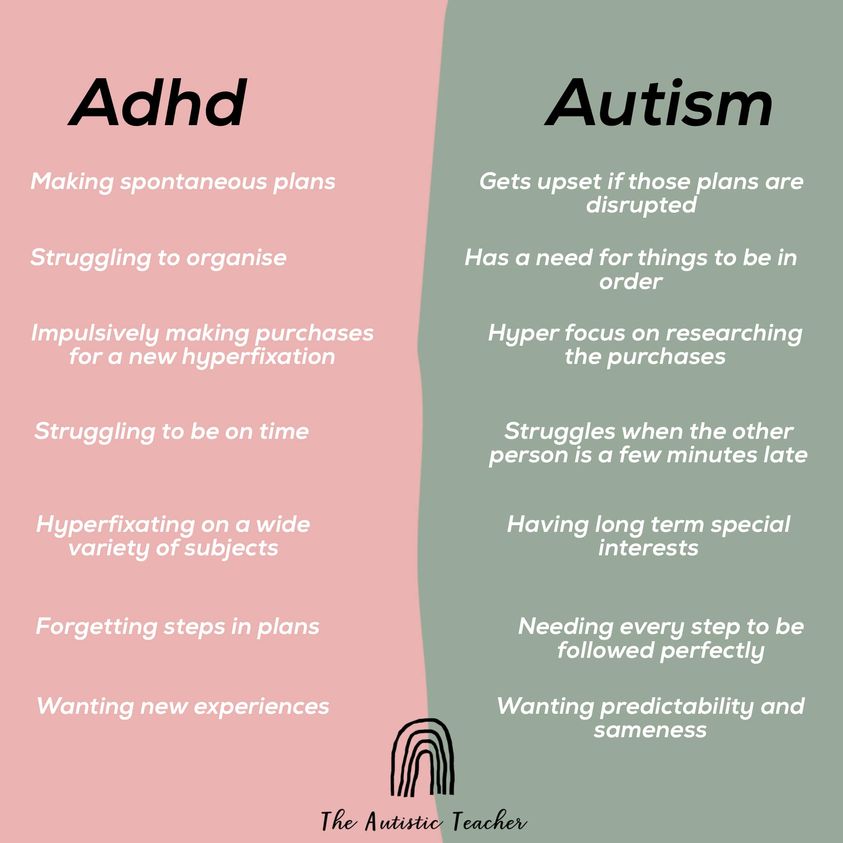
    Found this graphic on my facebook feed, from the page The Autistic Teacher. It made me consider which of the two sides I fall on for each item:

    • Probably more likely to get upset if plans disrupted, especially as a child. Might occasionally make spontaneous plans, I’d need to mindfully observe myself to work this out
    • Struggle to organise, definitely
    • Impulsively spend!
    • Struggles when others are late (and likely to be early to compensate for bad time keeping)
    • Both: usually i’ll have a special interest I spend time almost casually engaging it, it’s very easy, it’s a low effort thing to spend time on. I’ll also have a range of hobbies that take effort to engage in, but that I can get fixated on
    • Forgetting steps in plans is more likely for me
    • Wanting new experiences, I love novelty.
  • Diagnostic report received

    After three months of waiting, I finally received my diagnostic report! It noted that my demand avoidance was ‘marked’ and causing ‘significant impact on my life’ which.. woah. I did not realise that it was that obvious and the impact so clear. Apparently the assessor had to make significant adjustments to the assessment process for me to be able to complete it, which I hadn’t noticed. It’s interesting that even though I feel as an adult, I fawn and mask, to a trained assessor my need for control was evident.

    It didn’t clearly state which subtype of ADHD I have, but did make references to both inattention and hyperactivity, so I assume it’s considered combined type. At the very least, I was right to identify hyperactivity in myself, as well as manic high energy – those two can be so difficult to distinguish! It didn’t help that during my last manic episode, I was exploring ADHD and explained manic high energy as ADHD. I will need to be careful to distinguish between the two in the future. Possibly noticing an increase in hyperactivity symptoms is a sign of hypomania for myself.