Tag: low demand

  • Post solstice hygge

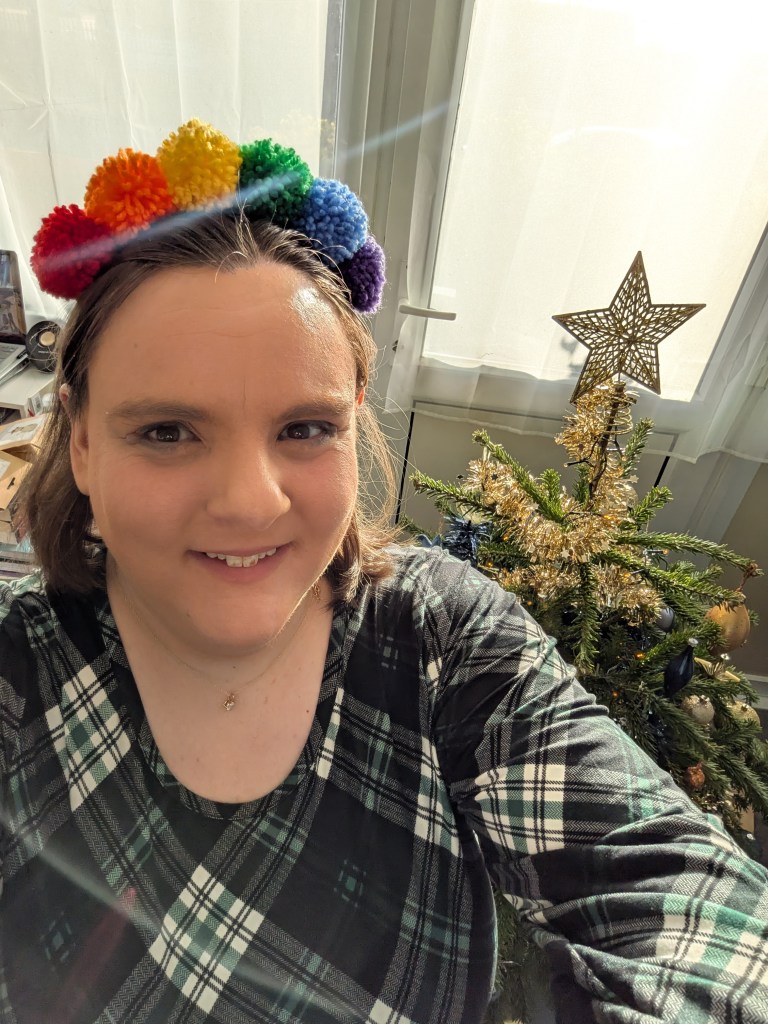
    Gosh I had a lovely “hygge” tonight with family. Hygge is a loanword from Danish, meaning a dark night, twinkly nights, good company (and good food and alcohol)

    Me and my mum cooked a starter and main, we had cheesecake, or cheese and crackers for dessert, so many snacks. Played a runthrough of a new board game I had in my yule stocking (a personal tradition), and a general knowledge quiz to finish up.

    I’m leaning into Christmas in a big way this year, as it’s the most normal Christmas I’ve had since 2019 (covid, mania, supported housing, mania, all got in the way of “normal”). It’s so nice to be well enough to be at home, to host an event even if prepping was so super demanding it took me 8 hours to complete getting ready (due all the the demand free time and pacing needed to cope).

    That’s the essence of a PDA christmas – you do it your own way. Lean in, or avoid most of it. Do it but in an unorthodox way. Adhere religiously to the rules of Christmas. Cling film wrapped presents.

    Whatever works for you, and the PDAers in your life.

    What worked for us mainly was that I set a “no expectations” rule – aside from no shoes in the flat. Other than that, we didn’t expect things of each other, and everyone was much happier. We made our own drinks, we did what we offered to help with, we’ve left the washing up for me and my carers to work on tomorrow (within reason).

    The Yuletide magic that I’ve been waiting for!
  • Unmasking when PDA

    I saw this post: https://www.instagram.com/p/C_lcEEEOSI3/?img_index=1 as a repost (I’ve linked the original here).

    I think it’s a pretty good list of suggestions for ways to unmask. I definitely do a lot of them, especially fidgeting and stimming in ways that feel comfortable. Connecting to the autistic community online has been like a homecoming for me, meeting fellow PDAers felt like I finally made sense as a person. I also work more to meet my sensory needs and to communicate these to others and ask for help to meet them.

    However, this isn’t the full picture for me. PDA requires some other things to be unmasked.

    A big start for me was tuning into my demand anxiety. I noticed that I met all the criteria for PDA, but couldn’t identify that feeling of anxiety at demands at first – but I knew I was very dissociative. With the help of brain spotting, I’ve become much less dissociative and I’ve become able to notice that bodily feeling of demand anxiety.

    That leads me to actively avoid rather than fawn. Fawning was a trauma response developed as the only way to maintain control and felt safety in times of abuse and trauma. It wasn’t healthy though, and lead to further traumatisation. Leaning into my desire to avoid, and to be in control of my choices has lead to a much more autonomous life. It also enables me to live openly as a PDAer

    Doing that means communicating about my experience of demand anxiety. Part of that recently has been creating my PDA flip chart (which you can see photos of here: https://www.instagram.com/p/C4ftcawsQuq/?img_index=1), which helped explain this experience to staff on my psychiatric ward. I talk to my mum about PDA as well, and she understands me a lot better now. I can advocate for myself much better now, which I am really glad for – it helps me protect myself.

    Ultimately, the biggest form of unmasking is looking for that autonomous, low demand lifestyle. It’s why I wasn’t happy to accept supported housing for a second time. It’s why having my own independent flat is lifechanging for me – I can do as I want, when I want. Equally, having carers really reduces demands on me, which makes life much healthier.