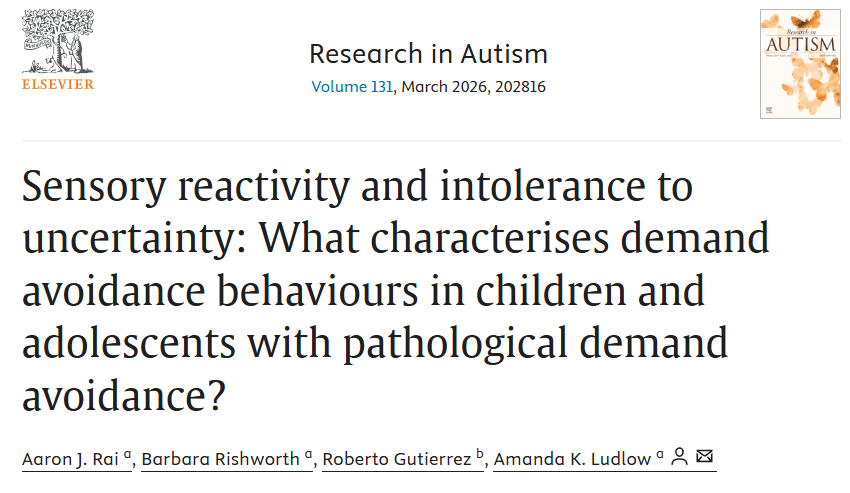
Well.. this is an interesting study, and I’m not sure I mean that in a good way. The authors found that sensory sensitives are the main predictor of demand avoidance in PDA kids (as measured by the “Extreme Demand Avoidance Questionnaire” or EDA-Q). Specifically, tactile sensitivity, taste and smell, and sensory seeking.
They also state that:
- scores on the EDA reduce with age, specifically in PDAers.
- intolerance of uncertainty only predicts EDA in neurotypical kids
From that, they theorise our demand avoidance helps us cope with anxiety, especially in the context of sensory overwhelm. Therefore we should look at demand avoidance as a “child’s response to their environment”, and provide suitable sensory supports.
The measures used in the study all relied on parental report.. and I wonder if this is where this disconnect between the findings and PDAers reported lived experience creeps in. I’ve never seen a PDAer describe the reason for their avoidance of demands to be sensory related. I do see however, that we have less capacity for demands when our senses are overwhelmed. Perhaps this is what this study is detecting.
All in all, it just reeks of an outsider perspective trying to make rational sense of the irrational nature of pathological demand avoidance. This study frustrates me, to be quite honest.
 PDA fae
Leave a comment